Before the Door Opens: The One-Page Introduction That Travels Ahead of a New Resident
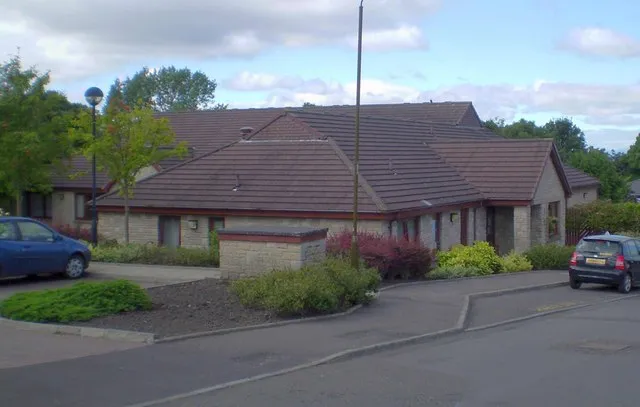
Photo: Tom Sargent, CC BY-SA 2.0, via Wikimedia Commons
Arriving at a residential care home is rarely a single event. It is a sequence of small arrivals: the first visit, the first night, the first meal taken in unfamiliar company, the first morning when somebody else is making the tea. However carefully a move is planned, a good deal of what matters is learned in the hours and days afterwards — often by staff who were not present at the assessment, and who meet the person, rather than the paperwork, at the start of a shift.
At St Dorothy's Residence, one modest document helps to close that gap. We call it the one-page introduction: a short, plain account of who someone is, written alongside them and the people who know them best, and kept where staff can reach it. It is not a care plan, and it is not a summary of needs. It is an introduction, in the ordinary sense of the word.
What a single sheet can hold
A page is a limited space, and that is part of its value. It forces a choice about what genuinely matters, and it discourages the long lists of categories that so often obscure a person rather than describe them.
On that page you might find the name the resident answers to, and how it should be said. You might find that hearing aids go in before breakfast, or that spectacles are kept in a particular drawer. There will be a note about the shape of the day: the hour at which someone tends to wake, the point in the afternoon when energy dips, the programme they will not miss. There may be a line about the mug they prefer, the chair they gravitate towards, the temperature of the room they find comfortable.
Worries belong there too, recorded straightforwardly and without drama: being hurried at mealtimes, being asked questions in front of a group, being approached from behind without warning. And so do joys — a crossword half finished on the table, a grandchild's visits, the radio on at four o'clock, a particular walk in the garden.
Written with the resident, not about them
Good introductions cannot be produced from a form completed in an office. Ours begin during the visits that precede a move, when the resident and, if they wish, a family member or friend sit down with a member of our team. The resident leads wherever possible. We ask open questions and write down the answers in their own words where we can.
Some people want to dictate every line. Others would rather we produced a draft and then corrected it, sentence by sentence. Both approaches are fine, and neither is faster than the other in any way that matters. What counts is that the resident recognises themselves on the page and has the opportunity to say that a line is not quite right. We also discuss what should be shared and with whom, since a resident may wish some things known to the care team but not, say, to every visitor.
Families often add the details that a resident would not think to mention: the fact that Sunday has always involved a particular outing, or that a certain topic is best avoided. That contribution is welcome, provided it is offered with the resident's agreement and does not quietly take over the document.
Read at handover, used in the moment
A document that lives in a filing cabinet changes nothing. Ours is read at handover, mentioned when a new colleague is shown around, and kept in the resident's room where it can be consulted in the middle of a shift rather than at the end of one. Staff supporting us for a single shift read it before they begin. The catering team refer to it when a question arises about a preference. The activities team use it when thinking about what someone might actually enjoy, rather than what is simply on offer.
Its everyday usefulness is often quite unremarkable. One resident, for many years known professionally by a title, found the immediate use of a first name jarring during her first fortnight. It was written on the page. It was never a problem. Another preferred to be helped into the day slowly, with conversation before any task; that single sentence reshaped the morning routine without anyone having to raise it as a concern.
A living document
An introduction written in September may be out of date by the spring. We review each page after the first month, and again whenever something changes: a shift in mobility, a bereavement, a new friendship, a different appetite, a hobby taken up or set aside. Residents may ask for a line to be changed at any time, and no ceremony is required. A page that cannot be annotated soon becomes a page nobody reads.
The difference between a form and an introduction
Forms ask for categories. Introductions offer particulars. The distinction shows in the language: a form records that a resident requires assistance with mobility, while an introduction says that she likes to walk to the dining room herself, holding an arm, and that the walk is part of the pleasure of the meal.
We therefore keep the tone plain and warm, avoid clinical shorthand and write in full sentences. Where possible, the resident's own phrasing is preserved, because it carries more than a paraphrase can.
If you are helping someone to move in
Families sometimes ask what they can usefully prepare. The answer is rarely a list of medical details, which we will gather separately. It is a few honest notes: what the person would want a stranger to know first, the routines that steady them, the small comforts that are easy to overlook, and the things that are best handled with care. One side of A4 is ample. Expect it to change.
The first day in a new home is made up of many small encounters, and staff will always learn far more from the person themselves than from any document. A single page cannot make someone known. It can, however, ensure that the first things said about them are accurate, considerate and theirs.