The Laminated Timetable Problem: Why Our Residents Write the Activity Agenda
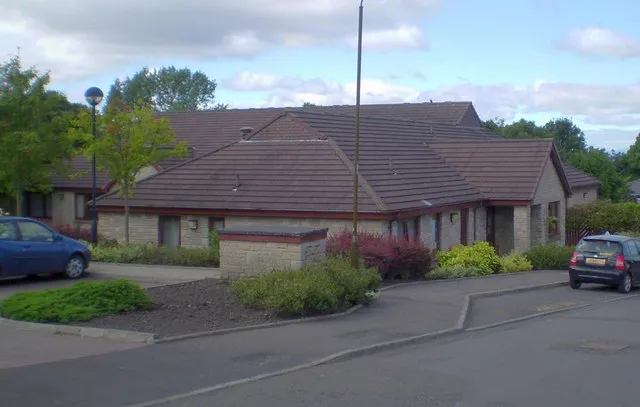
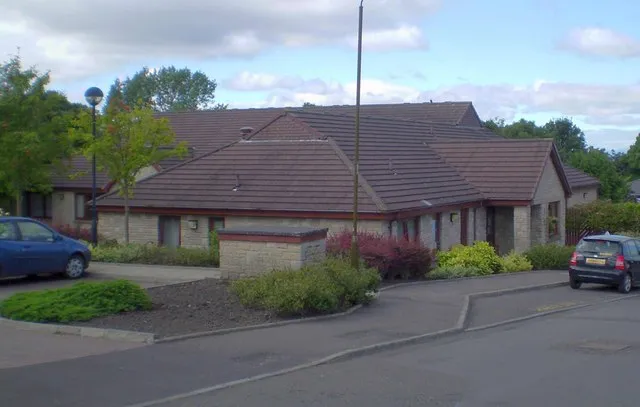
Photo: Tom Sargent, CC BY-SA 2.0, via Wikimedia Commons
Ask most people to picture activities in a residential care home and they will produce the same image: a laminated timetable pinned to a noticeboard, chair-based exercise at half past ten, bingo at two, a singer at four on a Friday. The picture is not entirely unfair. It is simply thin. It tells you what a building offers, and nothing at all about what the people living in it actually want, notice or remember afterwards.
That gap matters more than it might appear. Activity is not decoration added to care once the serious business of medication and mobility is done. For most residents it is the substance of the day, the difference between being looked after and living somewhere. And the default assumption — that a timetable devised by staff, repeated quarterly, is the natural way to organise it — deserves to be challenged rather than inherited.
An assumption worth questioning
The laminated timetable persists because it is convenient, defensible and easy to evidence. It can be photographed for an inspection. It shows a full week. It demonstrates that something is happening. What it cannot show is whether anyone wanted it, whether anyone came willingly, or whether anyone could tell you on Monday what they had done on Friday.
There is also a subtler problem. Timetables built around what a group can do tend to settle on the lowest common denominator — the activity that offends nobody and engages nobody very much. The results look respectable in a newsletter and feel flat in the room.
Listening is slower than scheduling
Our starting point is a conversation, and it is deliberately not the sort that fits neatly into a form. Residents are asked, individually, what they used to enjoy rather than what they would like to do — the past tense often unlocks more. A woman who insists she never does crafts may mention, three minutes later, that she used to make all her own curtains. A retired bus driver may have no interest in quizzes but a great deal to say about the route he drove for thirty years, and would happily talk about it to a room if asked.
Key workers gather this over weeks rather than in a single sitting, because preferences shift and confidence grows. Families contribute, particularly where a resident is living with dementia and cannot easily articulate their own history. Resident meetings add a further layer: not a suggestion box by the door, but an actual conversation, minuted and reported back, in which residents can say that the Sunday film is too loud or that nobody wanted the quiz.
Adapting without diluting
The easy response to a wide range of abilities is to simplify everything until it suits everyone, which usually means it satisfies no one. We try to do the opposite: vary the format rather than lower the bar.
That means some activities run in small groups and some one-to-one. It means a poetry session can be a reading for those who prefer to listen and a writing group for those who want to contribute a line. It means acknowledging that a resident with advanced dementia may experience a singalong differently from a resident who can recall every word of a Vera Lynn number, and planning for both in the same hour. It means evening and weekend provision, because a timetable that stops at five o'clock quietly assumes that residents have nothing to do once families go home. And it means protecting the quiet option: not everyone wants company at three in the afternoon, and choosing solitude is a legitimate answer.
Food, faith and the outdoors do a surprising amount of this work. A baking afternoon, a service taken by a local minister, a raised bed in the garden, a fish and chip supper, an outing to the coast — these are ordinary things, and ordinary things are what most people mean by a good week.
Measuring engagement, not attendance
Attendance is a poor measure. A room can be full because it is warm and the alternative is a bedroom, and a resident can sit through forty minutes of an activity without taking part in any meaningful sense. We try to record something less tidy: who chose to come, who spoke, who stayed to the end, who asked when the next one was. Staff note the things that are hard to count — the resident who rarely joins in but sang along from the doorway, the man who had not spoken much all week and talked for twenty minutes about the allotment.
Because the assessor is often the resident. The question we return to is not how many attended but whether anyone would mind if it stopped.
The weeks that do not work
Honesty is part of this. Some weeks land badly. A quiz that seemed well judged falls flat because the questions are too hard, or because the person who would have carried it is unwell. A visiting entertainer appeals to one corner of the room and leaves the rest restless. Staff shortages mean the gardening afternoon quietly disappears from the board. And there is a particular kind of failure that is hardest to admit: an activity designed by well-meaning people for residents rather than with them, which everyone politely tolerates.
When that happens, the review has to be genuine rather than defensive. Sometimes the answer is to change the time, sometimes the format, sometimes to abandon the idea entirely and ask again what people actually want.
What community in every day means
There is a version of residential care in which activity is a service delivered to passive recipients, and there is a version in which residents shape the day they live through. The second is harder to run, harder to evidence on a clipboard, and considerably more worth doing.
At St Dorothy's, the phrase we keep returning to is care, comfort and community in every day. Community is not something that can be scheduled for a Wednesday. It is the accumulated result of asking, repeatedly and sincerely, what people would like to do — and then being willing to change the answer on the board when they tell us.