The Passing Place: Small Seats and Everyday Company Along Our Corridors
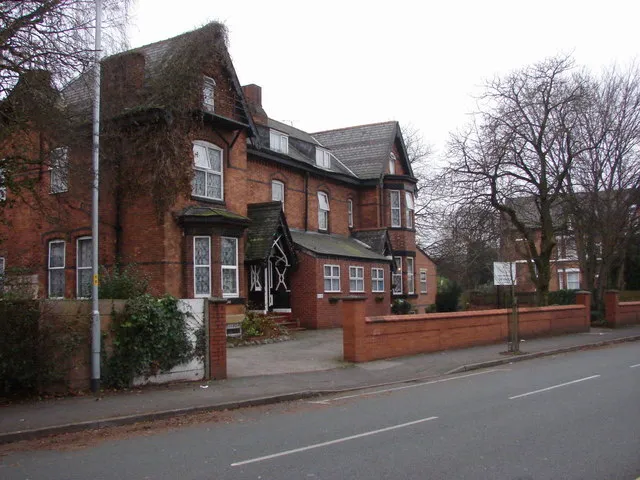
Photo: David Hawgood, CC BY-SA 2.0, via Wikimedia Commons
At St Dorothy’s Residence, the day is not made only in the lounge, the dining room or the activity space. Some of its most ordinary moments happen along the way: a resident resting for a moment by the front door, two neighbours comparing notes at the end of a corridor, a visitor pausing by the window seat that looks out over the garden. These are small events, easily overlooked. Yet they are part of how a place feels like home rather than an institution.
Corridors are usually discussed in practical terms. They must be clear, well lit and safe. They must allow wheelchairs, walking frames and staff to pass without obstruction. All of that remains true. But a corridor can also be a passing place — not a lounge in disguise, and not an activity room by another name, but a modest part of the building where a resident may stop, catch breath and speak to someone without feeling that they are in the way.
Why the corridor is not simply a route
In residential care, movement is often spoken about as a task. A resident is assisted to the dining room, escorted to an appointment, accompanied back to their room. Those journeys matter, but they are not the whole story. A corridor is also a piece of shared territory. It belongs to everyone and to no one in particular. That makes it a useful place for brief, low-pressure contact.
A resident who does not wish to join a large group may still be glad of a few words with a passing neighbour. A family member arriving for a visit may find a natural place to pause before going further into the building. A person who tires easily may need a seat between their room and the garden door. None of these moments requires a programme or a formal invitation. They require somewhere to sit, decent light and the confidence that pausing is permitted.
The chair that earns its place
Not every chair in a corridor is a good chair. A seat that looks tidy but is too low, too soft or without arms may be difficult for an older person to use safely. A chair placed where it narrows a walkway can create a hazard rather than a welcome. The useful chair is usually unremarkable: firm, at a sensible height, with arms that help a person to rise, and positioned so that it does not obstruct movement or fire exits.
At St Dorothy’s, we try to think about the purpose of each seat. Is it for a short rest, for waiting, for conversation, or for looking out of a window? The answer affects where it goes. A seat by the front door may serve visitors and residents who are waiting for transport. A window seat at the end of a corridor may suit someone who wants to watch the garden without going outside. An alcove with two chairs may invite a quiet exchange, provided it is not so enclosed that a resident feels trapped or overlooked.
We also try to avoid the language of decoration when discussing these choices. A chair is not there to complete a colour scheme. It is there to be used.
Light, draughts and the dignity of a pause
Comfort is rarely a single feature. A corridor can be perfectly warm and still unpleasant if the lighting is harsh, the floor is noisy, or a draught makes the end of the building feel inhospitable. Residents notice these things more than we sometimes expect. They may avoid a particular stretch of corridor not because they are uninterested in company but because the seat is in a cold spot or the glare from a window makes conversation difficult.
Good lighting should be even and gentle, with no dark corners and no unnecessary glare. Natural light is valuable where it exists, but it needs to be managed so that a resident is not sitting in full sun or facing a bright window while trying to speak to someone. Flooring matters too. A hard surface that amplifies every footstep can make a quiet pause feel exposed. Where possible, we look for simple improvements: a softer finish, a curtain that can be drawn, a chair moved a little further from a doorway.
These are not grand design interventions. They are the sort of adjustments that make a passing place feel cared for rather than merely provided.
Watching without hovering
There is a balance to be struck in staff observation. Residents should be safe, but they should not feel watched. In a corridor, the difference is often a matter of distance and manner. Staff pass by, greet people, notice when someone seems tired or uncertain, and move on. They do not stand over a resident who is simply sitting quietly. They do not turn a brief rest into an assessment.
At St Dorothy’s, handover includes the small details that help with this: who has been using the window seat in the afternoons, who prefers the chair near the front door, who has seemed less steady on their feet since the weekend. That knowledge allows us to be attentive without being intrusive. If a resident is sitting in a place that has become unsafe, we can respond. If they are simply enjoying a few minutes of company, we can let them be.
When a corridor should stay a corridor
It would be easy to overstate the case. A corridor is not a lounge, and it should not be treated as one. There are times when it must remain clear and quiet: during an emergency, when equipment is being moved, when a resident needs privacy or when the risk of crowding is too great. A passing place works only if it respects the primary purpose of the space.
That is why we avoid permanent clutter. We do not fill corridors with extra furniture simply to make them feel busy. We do not encourage residents to treat every corner as a social club. The aim is modest: a few well-chosen seats, a reasonable standard of light and warmth, and a culture in which a short pause is accepted as part of ordinary life.
A small architecture of belonging
Belonging is often built from very small things. A chair that is comfortable. A window that gives a view. A member of staff who says good morning and does not hurry on. A fellow resident who stops for a minute and then continues on their way. These moments do not replace the dining room, the activities programme or the garden. They sit alongside them, quietly filling the spaces between.
For families and referrers, this may be a useful question to ask of any care setting: where can a resident sit for a moment without being in the way? The answer can reveal a great deal about how a home understands everyday life. At St Dorothy’s, we do not pretend that our corridors are lounges. We do, however, want them to be places where a resident can pause, breathe and be part of the community — even if only for the length of a short conversation by the door.