The Reading Habit, Gently Kept: Books, Audio and Conversation at St Dorothy's
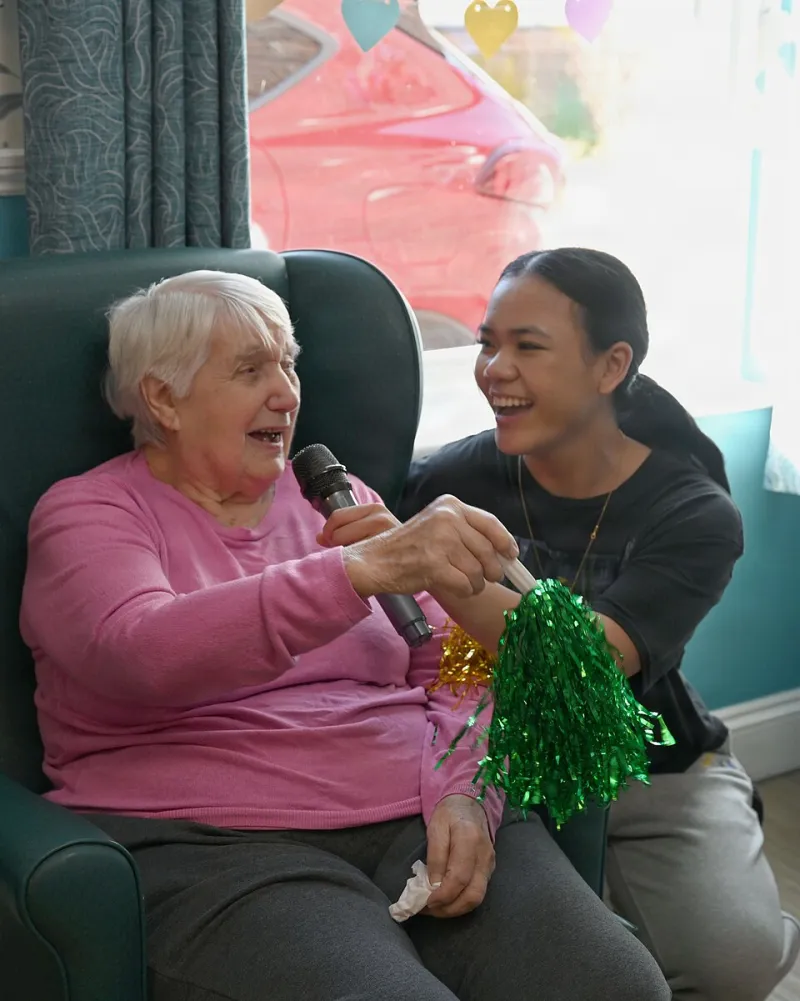
Photo: U.S. Air Force photo by Karen Abeyasekere, Public domain, via Wikimedia Commons
Moving into residential care does not mean leaving reading behind. It may mean reading in a different way, at a different pace, or with a different kind of support. A resident who once read for an hour before bed may now prefer a short story in the afternoon. Someone who devoured novels may find that an audiobook suits better than print. Another may not read at all in the conventional sense, but still enjoys hearing the local paper discussed over a cup of tea. At St Dorothy's Residence, reading is treated as part of ordinary daily life rather than an activity to be scheduled and measured.
A Trolley Is a Beginning, Not a Library
The library trolley is a familiar sight in many care homes, and it has a practical value. It brings choice to the corridor rather than waiting for someone to seek out a bookshelf. But a trolley is only a starting point. At St Dorothy's, staff try to build a picture of what each resident actually enjoys: crime novels or short stories, poetry or local history, gardening magazines or the daily crossword. Some residents want to browse and choose for themselves. Others prefer a recommendation, or simply the chance to talk about what they used to read.
The trolley works best when it prompts conversation rather than a test of reading. A member of staff might notice that a resident's eyes tire quickly and suggest a large-print title. They might discover that a former teacher enjoys poetry but no longer manages a whole collection. They might learn that someone who rarely picks up a book will happily listen to a familiar voice reading a chapter aloud. None of this is unusual. Reading in later life is not a single habit; it is a set of habits, and they can be adapted.
The Format Matters More Than the Title
When reading becomes harder, the first response is often to find a better book. Sometimes the better answer is a better format. Large print, clear type and good lighting can make a real difference. So can an audiobook with a clear narrator and adjustable speed. Residents who struggle with a printed page may still follow a story closely by ear, and families should not assume that listening is a lesser form of reading.
For families thinking about what to bring in, it is worth asking a few practical questions before arriving with a bag of books. Does the resident prefer print, audio or both? Is there a favourite author or genre that has been enjoyed in the past? Would a magazine or newspaper be more welcome than a novel? If a tablet or e-reader is being considered, staff can advise on charging, storage and simple setup. Devices should be labelled, and it helps to check whether the resident is comfortable using them. A lightweight radio or a simple audio player may be more useful than a complex device with too many options.
UK readers have useful resources to draw on. Local library services often offer large-print books and audiobooks, and some provide a home library service. The RNIB offers talking books and reading support for people with sight loss. BBC Sounds and radio programmes can provide news, drama and music without any need for print. These are not replacements for a good book, but they are practical ways of keeping stories within reach.
Newspapers, Puzzles and the Shape of a Morning
The daily paper can anchor a morning. For some residents, the routine of reading the headlines, attempting the crossword or checking the football results is as important as the content itself. Local newspapers can be particularly valuable because they carry familiar place names, photographs and stories that prompt memory and conversation. Staff can read items aloud for residents who find small print difficult, and a shared headline can easily become a discussion about the past or the present.
Magazines serve a similar purpose. A gardening magazine, a history title or a publication with strong photographs can be browsed rather than read from cover to cover. There is no requirement to finish an article. A few minutes with a picture and a caption may be enough. At St Dorothy's, staff try to keep a range of material available so that reading does not depend on one format or one level of concentration.
Reading Together Is Still Reading
Shared reading is one of the simplest forms of company. A poem read aloud at teatime, a short story in a quiet lounge, or a chapter shared between a resident and a visitor can all serve the same purpose: they give people something to think about together. The conversation that follows is often as valuable as the text itself. A remembered line, a familiar place, a character who reminds someone of a relative — these are the moments that make reading social.
For residents living with dementia, familiar stories and rhymes can be especially reassuring. Picture books, photo albums with short captions, and well-known poems can offer a way into conversation without pressure. The important thing is to follow the resident's lead. There is no need to quiz or correct. A story can be a prompt rather than a task.
What Families Can Bring — and What to Ask First
Families often want to help, and reading is a generous way to do so. A favourite book from home, a subscription to a local paper, a set of audiobooks or a magazine about a lifelong interest can all be welcome. But it is worth asking staff first about storage, sharing and charging. A single well-chosen title is often more useful than a large box of books that overwhelms the room. It also helps to label personal items clearly and to check whether the resident would like to keep them private or share them with others.
A short note about preferences can be surprisingly helpful: the authors that have been enjoyed, the newspapers that have been taken for years, the radio programmes that are missed. Staff can then offer choices that feel personal rather than generic. Reading is not a clinical intervention, and it does not need to be prescribed. It is a pleasure, a habit and a link to the world. At St Dorothy's, the aim is to keep that link gently open, one page, one voice or one conversation at a time.